.svg)
.svg)

.svg)


.svg)
.svg)
.svg)
.svg)

.svg)
.svg)
.svg)
.svg)
Classifying Your Workers Correctly
Your company must decide whether each Florida hire is an employee or an independent contractor using the IRS common law control test and federal guidance. Florida generally follows federal standards, focusing on behavioral control, financial control, and the overall nature of the relationship.
If you misclassify workers, you may owe back wages, unpaid overtime, payroll taxes, interest, and civil penalties, and you could face audits from the IRS and Florida agencies. You can review Playroll’s guide on misclassification to help you structure compliant roles and contracts.
Verify Employee Work Eligibility
For every employee you hire in Florida, you must complete federal Form I-9 within 3 business days of the employee’s start date. You must review original identity and work authorization documents, such as a U.S. passport or a combination of driver’s license and Social Security card, and record the details on the form.
Florida law requires most private employers with 25 or more employees to use E-Verify to confirm new hires’ work authorization. You must retain I-9s for at least 3 years after the hire date or 1 year after termination, whichever is later, and store them separately from general personnel files for easier inspection.
Create an Employee Onboarding Process
When onboarding employees in Florida, you should issue a clear written offer letter outlining pay rate, pay schedule, exempt or nonexempt status, and key benefits. You will also need to collect a completed federal Form W-4, any direct deposit authorization, and signed acknowledgments for your employee handbook and key workplace policies.
Florida requires you to report all new hires to the Florida New Hire Reporting Center within 20 days, and you should provide any benefit enrollment forms and safety or harassment training materials early in the process. Building a structured onboarding checklist helps you keep costs visible and predictable as you scale hiring in Florida.
Calculate the true cost of hiring employees in Florida
Get a clear breakdown of employee costs, payroll taxes, benefits, and fees across 50+ states.
Calculate Costs
Pay Frequency & Methods
Florida does not set a specific minimum pay frequency, but your company must pay employees on a regular, predictable schedule that you communicate in writing. There is no state law on final paycheck timing, yet best practice is to pay all wages due by the next regular payday to reduce wage claim risk and maintain good records.
Payment Methods (How You Can Pay)
You can choose from several payment methods in Florida, but you must always ensure employees receive at least the applicable minimum wage and a clear wage statement each pay period.
- Payroll Check: You can pay employees by check as long as it is payable at full face value and employees have reasonable access to cash it without fees.
- Cash: You may pay wages in cash, but you must keep detailed records and provide a written pay stub showing hours, rates, and deductions.
- Direct Deposit (EFT): You can offer direct deposit as a voluntary option and must obtain each employee’s consent and provide an alternative method if they decline.
- Paycards: You may use paycards if employees can access their full wages at least once per pay period without fees and you disclose terms in writing.
- Outsourced Payroll: You can outsource payroll to a third-party provider, but your company remains responsible for accurate wage payments, tax withholdings, and filings.
When you hire employees in Florida, you must handle federal payroll taxes and Florida’s state reemployment tax, even though the state does not levy a personal income tax. You will need to register with the Florida Department of Revenue and the IRS, withhold the correct amounts from employee paychecks, and remit employer contributions on time.
Employer Tax Contributions
Your company must budget for employer-side payroll taxes, including Social Security, Medicare, federal unemployment (FUTA), and Florida reemployment tax. You will register for a Florida reemployment tax account if you pay at least 1,500 USD in wages in a calendar quarter or have one or more employees for 20 weeks in a year.
Employee Payroll Tax Contributions
Your Florida employees pay federal income tax plus their share of Social Security and Medicare, which you must withhold and remit. Florida does not have a state personal income tax, so you do not withhold state income tax from employee wages.
Run compliant, on-time payroll in Florida
We cut payroll processing time by 80%, ensure full compliance, and provide hands-on support for both employers and employees.
Explore Payroll Services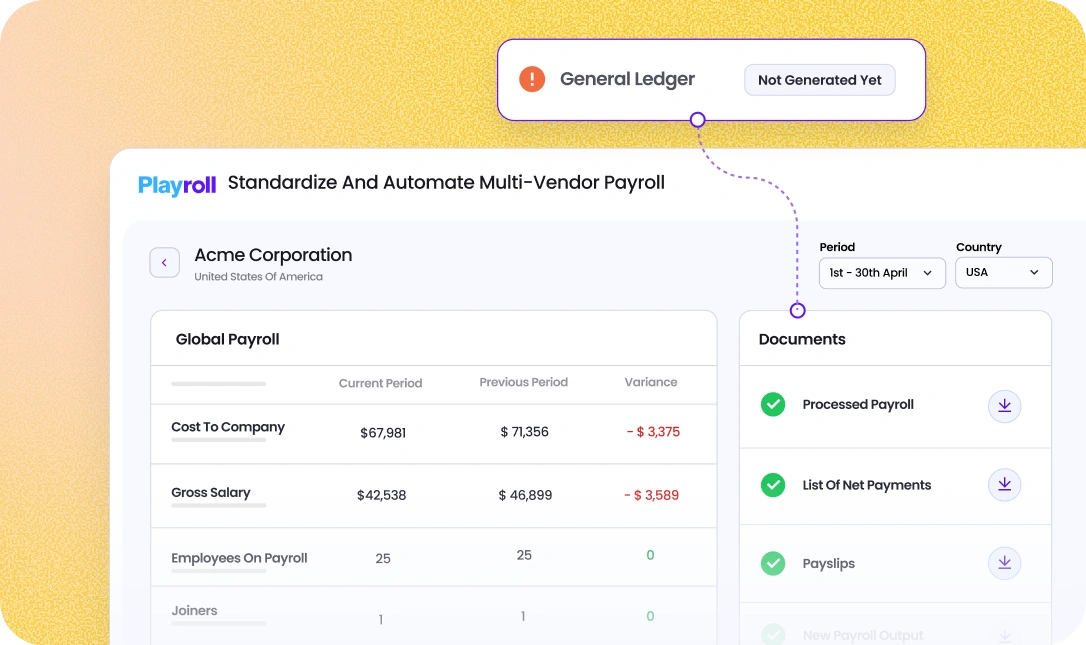
Minimum Wage in Florida
Florida’s minimum wage is set by the state constitution and as of January 2026 sits at $14.00 per hour. It's scheduled to reach $15.00 per hour on September 30, 2026, with annual increases tied to inflation thereafter. You must pay the higher of the federal or Florida rate, and keep posted notices of the current state minimum wage at your worksites.
Working Hours in Florida
Florida does not impose daily hour limits for adults, so you can set schedules as needed if you comply with federal wage and hour rules. You should track all hours worked, including short rest periods under 20 minutes, and clearly communicate expected workweeks, breaks, and meal periods in your policies.
Overtime in Florida
Florida has no separate overtime statute, so you must follow the federal Fair Labor Standards Act, which requires overtime pay at 1.5 times the regular rate for nonexempt employees who work more than 40 hours in a workweek. Your company should document exempt classifications carefully and maintain accurate time records to support overtime calculations.
In Florida, you must follow federal benefit laws such as the Affordable Care Act, which requires applicable large employers with 50 or more full-time employees to offer affordable health coverage or face potential penalties. Beyond legal minimums, offering competitive benefits like health insurance, retirement plans, and paid leave can help your company attract and retain talent in a tight labor market.
Mandatory Leave Policies in Florida
Paid Time Off in Florida
Florida law does not require private employers to provide paid vacation or general PTO, so you can design your own policy. Once you adopt a PTO policy, you should clearly state accrual rates, caps, and whether unused time is paid out at separation, and then follow that policy consistently.
Many Florida employers offer at least 10 to 15 days of PTO per year for full-time employees to stay competitive. You should document PTO balances in your payroll or HR system so employees can see their available time and you can accurately account for costs.
Maternity & Paternity Leave in Florida
Florida does not mandate separate paid maternity or paternity leave for private employers, but eligible employees may qualify for up to 12 weeks of unpaid, job-protected leave under the federal FMLA. You must maintain group health benefits during FMLA leave on the same terms as if the employee were working.
Many employers in Florida choose to supplement FMLA with paid parental leave or short-term disability benefits to cover part of an employee’s income during childbirth recovery. Clearly outlining eligibility, length of leave, and pay replacement in your policies helps employees plan and reduces disputes.
Sick Leave in Florida
There is no statewide requirement for paid sick leave in Florida, and state law restricts local governments from imposing their own paid sick leave mandates on private employers. You may still choose to offer paid or unpaid sick leave, either as a standalone benefit or as part of a broader PTO bank.
If you provide sick leave, you should define what absences qualify, whether you require medical documentation after a certain number of days, and how unused sick time is handled at year-end or separation. Consistent application of your policy is important to avoid discrimination claims.
Military Leave in Florida
Florida law and federal USERRA protect employees who take leave for active duty, training, or other covered military service. You must allow eligible employees to take unpaid leave for service and restore them to the same or an equivalent position when they return, subject to statutory conditions.
Some Florida public employers provide paid military leave, but private employers are generally not required to pay for this time. Your company should track military leave separately and ensure benefits and seniority are handled in line with federal and state protections.
Jury Duty in Florida
In Florida, you must allow employees time off to serve on a jury and may not discipline or terminate them for complying with a jury summons. Private employers are not required by state law to pay employees for time spent on jury duty, but many choose to provide a limited number of paid days.
You can request proof of jury service, such as a summons or attendance slip, and you should explain in your policy whether employees must use PTO or will receive separate jury pay. Make sure managers understand that pressuring employees to avoid jury service can create legal risk.
Voting Leave in Florida
Florida does not require private employers to provide paid or unpaid time off specifically for voting, but many employees can vote early or by mail. Even without a mandate, offering flexible scheduling on election days can support participation and improve employee morale.
Your company should communicate any voting leave or flexible scheduling practices ahead of major elections so employees can plan. Avoid policies that could be seen as discouraging employees from voting during lawful nonworking hours.
Bereavement Leave in Florida
Florida law does not require employers to provide bereavement leave, paid or unpaid, for private-sector employees. However, many employers offer 3 to 5 days of paid bereavement leave for the death of an immediate family member as a standard practice.
If you offer bereavement leave, define who qualifies as an immediate family member, how much time is available, and whether documentation is required. Clear guidelines help managers respond consistently and compassionately during difficult times.
Termination Process
Florida is an at-will employment state, so you or the employee can end the relationship at any time for any lawful reason, provided you do not violate anti-discrimination or retaliation laws. You should document performance issues, policy violations, and prior warnings to reduce the risk of wrongful termination claims.
Notice Period
Florida law does not require employers or employees to give advance notice before termination, unless a contract or collective bargaining agreement specifies otherwise. Even without a legal requirement, giving brief notice and conducting an exit meeting can help you recover company property and communicate final pay details.
Severance
Severance pay is not required under Florida law, but you may choose to offer it in individual agreements or company policies, often in exchange for a release of claims. If you adopt a severance plan, apply it consistently and ensure any releases comply with federal rules, especially for employees aged 40 or older.

ABOUT THE AUTHOR
Jaime Watkins
Jaime is a content specialist at Playroll, specializing in global HR trends and compliance. With a strong background in languages and writing, she turns complex employment issues into clear insights to help employers stay ahead of the curve in an ever-changing global workforce.
How do you set up payroll processing in Florida?

.png)
To set up payroll processing in Florida, you first obtain a federal EIN from the IRS and register with the Florida Department of Revenue for reemployment tax if you meet wage or employee thresholds. Then you choose a regular pay schedule, configure a payroll system to handle federal tax withholding and Florida reemployment tax, collect Forms W-4 and I-9 from employees, and establish a process for issuing pay, tracking hours, and filing required federal and state returns on time.
How does an Employer of Record help you hire in Florida?
An Employer of Record helps you hire in Florida by acting as the legal employer on paper, so you do not need to open a Florida entity or manage state payroll registrations yourself. The provider handles compliant employment contracts, onboarding, payroll, tax withholding, Florida reemployment tax filings, and benefits administration, while you manage the employee’s day-to-day duties and performance.
Is there a minimum wage requirement for employees in Florida?
Yes, there is a minimum wage requirement for employees in Florida, and it is higher than the federal minimum wage at $14.00 per hour. Under the state constitution, Florida’s minimum wage is scheduled to reach $15.00 per hour on September 30, 2024, and your company must pay at least this rate to nonexempt employees working in the state and post the official minimum wage notice at your worksites.
How much does it cost to employ someone in Florida?
The cost to employ someone in Florida includes the employee’s gross wages at or above the Florida minimum wage, plus employer payroll taxes such as Social Security, Medicare, FUTA, and Florida reemployment tax, along with any benefits you choose to offer. You should also budget for workers’ compensation insurance if you meet coverage thresholds, payroll processing fees, and indirect costs like equipment, training, and paid time off to understand the full cost of a Florida hire.

.svg)
















































.svg)